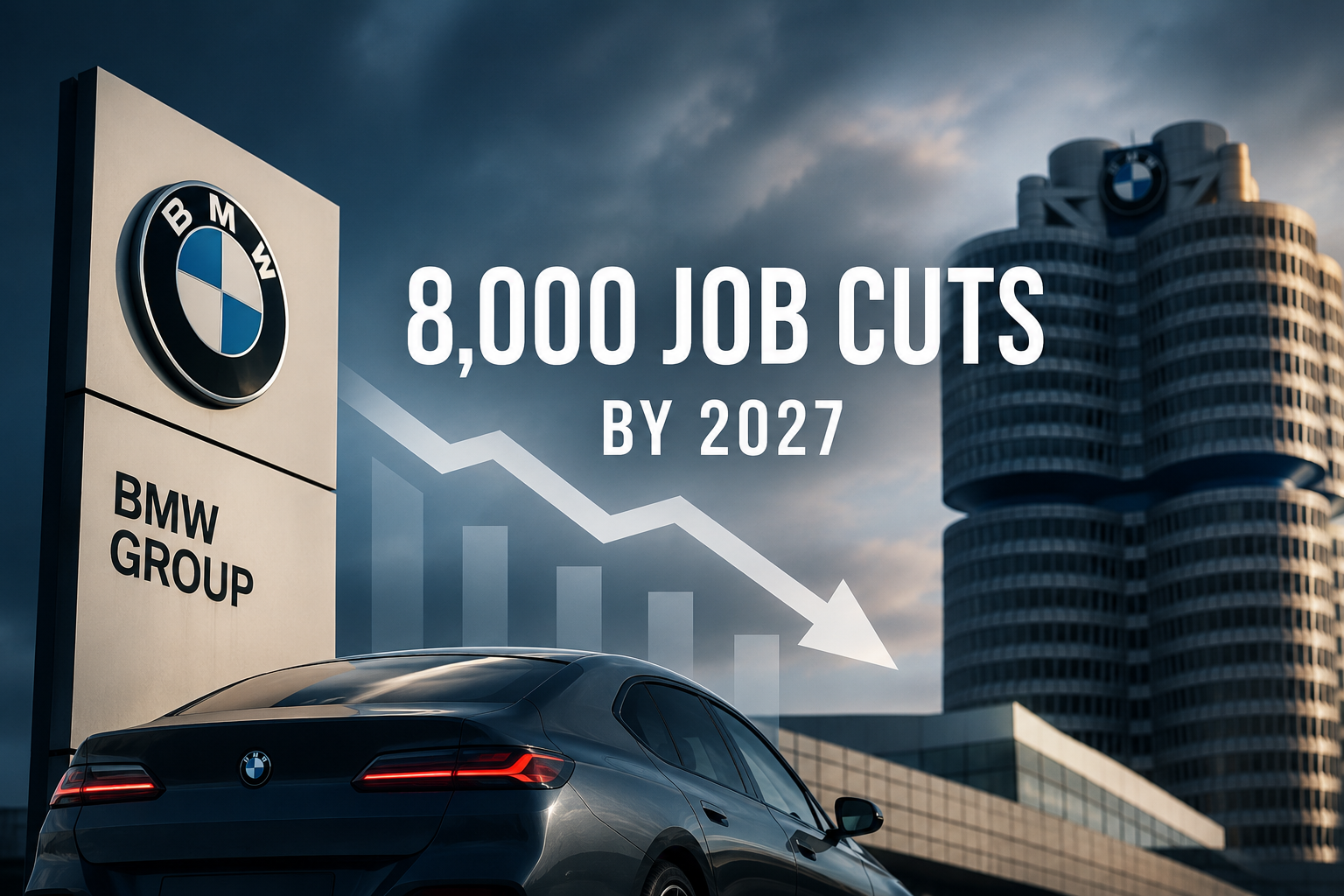
BMW to Cut 8,000 Jobs by 2027: Should BMW Owners Be Concerned?
For years, BMW stood out as one of the few German automakers that managed to avoid large-scale workforce reductions while many competitors announced thousands of job cuts.
That is now changing.
BMW Group has confirmed plans to reduce approximately 8,000 positions by the end of 2027. However, this is not a traditional mass layoff. Most reductions will be achieved through voluntary departure programs, early retirement, and natural employee turnover rather than compulsory dismissals.
Why is BMW restructuring?
The global automotive industry is undergoing one of the biggest transformations in decades.
BMW faces several major challenges:
- weaker vehicle demand in China;
- increasing competition from Chinese EV manufacturers;
- heavy investments in the Neue Klasse platform;
- the need to improve long-term profitability.
According to BMW management, the restructuring is intended to make the company more agile while protecting its ability to invest in future technologies.
Manufacturing will continue
The restructuring is expected to focus mainly on administrative, engineering and corporate functions.
Production workers are largely excluded from the program, meaning manufacturing of current and upcoming BMW models—including the highly anticipated Neue Klasse vehicles—will continue as planned.
What does this mean for BMW owners?
For customers, there is currently little reason for concern.
BMW has not announced any reduction in vehicle support, software development, or future product plans.
The company continues investing heavily in:
- Neue Klasse EVs;
- next-generation software;
- driver assistance technologies;
- digital services;
- electrification.
Management views the restructuring as a necessary step to strengthen BMW's competitiveness rather than scale back innovation.
BMW is not alone
BMW joins several other German manufacturers that have announced cost-saving measures in recent months.
Volkswagen, Mercedes-Benz, Porsche and Audi have all introduced restructuring programs as the industry adapts to electrification, slowing demand in China, and increasing global competition.
Final Thoughts
The announcement of 8,000 job reductions may sound alarming, but it should not be interpreted as a sign that BMW is abandoning its long-term strategy.
Instead, the company is streamlining its operations while continuing to invest billions in future products, digital technologies, and the next generation of BMW vehicles.